
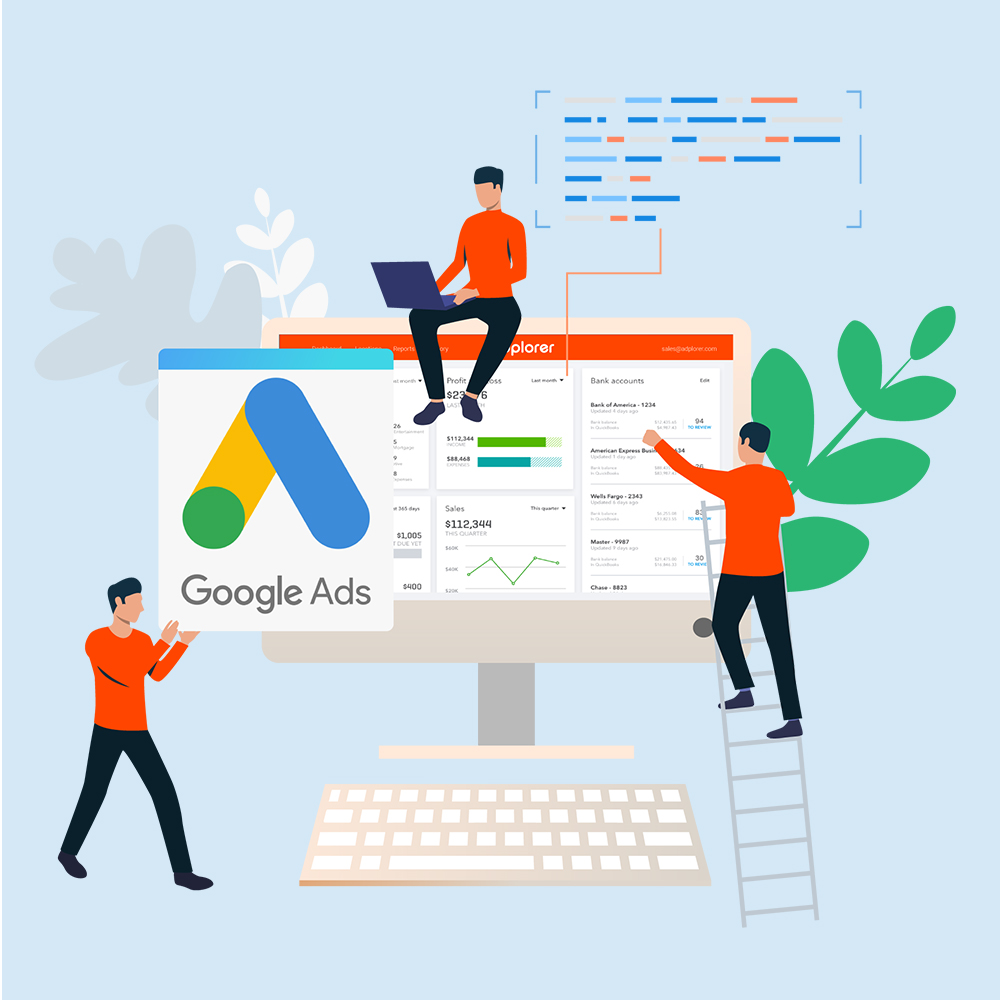
Google Ads Consulting Services: Maximize Campaign Performance
Our Google Ads consultants help you get more from your ad budget—attracting new customers and exceeding your sales objectives.
- Premier Google Partner agency with in-house, certified Google Ads specialists
- Customized, in-depth recommendations tailored to your campaigns
- On-demand consulting and comprehensive audits
Google Ads Consultants Who Reach the Right Audience and Deliver Qualified Traffic
Stop wasting ad spend on guesswork.
For more than 5 years, Boom In Technologies has helped hundreds of businesses effectively use paid traffic channels like Google Ads to maximize their advertising investment. Our targeted Google Ads consulting services are designed to pinpoint your ideal audience, attract new customers, and send high-intent, qualified traffic to your website, storefront, or business—without overspending. Every campaign is built strategically to ensure your budget works harder and delivers measurable value.
Backed by specialists across multiple disciplines, our Google Ads consultants know how to turn traffic into real results, including conversions, increased sales, phone calls, leads, and revenue. Whether you’re exploring Google Ads for a new venture or need a thorough audit of existing campaigns, OuterBox has the expertise to help. Contact us today to learn more about our Google Ads consulting services—there’s no cost or obligation to get started.
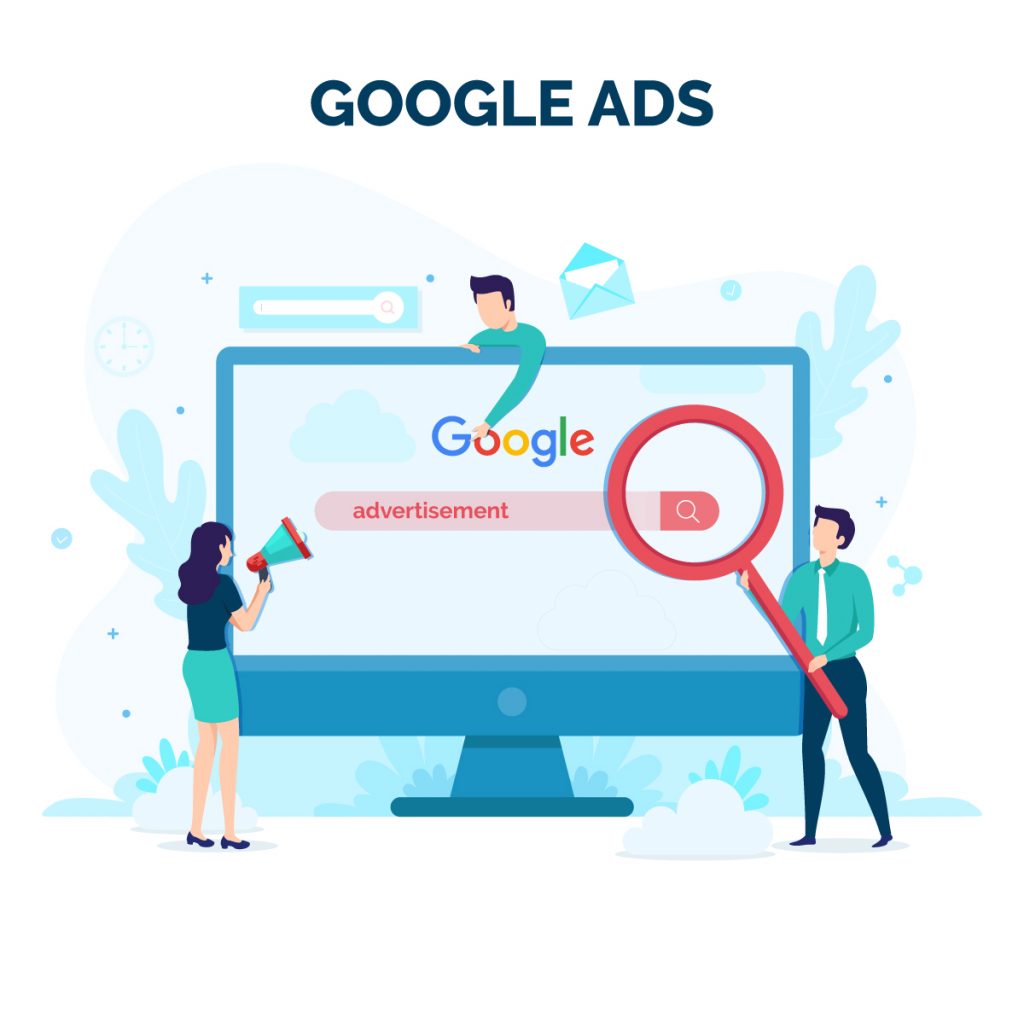
What Our Expert Google Ads Consulting Services Cover
Curious how our Google Ads consulting services work? Every business has unique goals, so we tailor our consulting approach to fit your specific needs. While no two strategies are exactly alike, our Google Ads consultant services typically include the following:
-
Paid Campaign Review & Execution
Our experienced Google Ads consultants evaluate your existing paid campaigns—especially within Google Ads—to identify strengths, weaknesses, and areas of wasted spend. We uncover missed opportunities and inefficient campaign structures that limit performance. Depending on your needs, we can act as strategic advisors providing guidance to your team or take full ownership of campaign management and implementation. -
Search Network Advertising Expertise
The Google Search Network extends beyond Google search results to include a wide range of search-related websites and platforms. We know how to strategically position your ads across this network, ensuring they appear in front of your ideal audience both on Google and across the sites they regularly visit. -
Ad Copy Testing & Optimization
After completing an audit, we prioritize improvements that deliver the fastest impact. Through structured ad variation and testing, we refine ad copy to improve quality scores and conversion rates—often achieving better results without increasing ad spend. -
Real-Time & Monthly Performance Reporting
Transparency is central to our process. When managing your Google Ads campaigns, we provide customized reporting, real-time performance dashboards, and one-on-one meetings as often as needed. Our reporting is designed around your key performance indicators, so you always know exactly how your campaigns are performing.
Call us at +91 8727070157 for a consultation.
What Is Google Ads?
Google Ads is a digital advertising platform that allows businesses to display paid ads within search engine results. In simple terms, it’s a pay-per-click (PPC) model—meaning you’re charged only when someone clicks on your ad.
These ads appear at the very top of search engine results pages (SERPs), above organic listings. When browsing online, you’ll often see well-known brands dominate search results. While budget plays a role, strong website performance and high engagement also contribute to visibility. For smaller or growing businesses, strategic Google Ads and Google Shopping campaigns can provide the boost needed to compete and gain prominent placement.
Benefits of Using Google Ads
Google Ads offers powerful advantages for businesses looking to increase visibility and drive traffic:
- Google handles roughly five billion searches every day.
- Google Ads generates approximately 3.5 billion ad interactions daily.
- The top three paid ad positions capture nearly 40% of all clicks.
- About 98% of users select a business listed on the first page of results.
- You have full control over your ad budget, including bids and daily spend.
- Monthly budgets can be adjusted at any time based on performance and ROI.
How Google Ads Bidding Works
Before launching your Google Ads campaign, you’ll need to decide what outcome matters most for your business. Your bidding strategy should align directly with your primary goals:
- Clicks
If driving traffic to your website is the priority, cost-per-click (CPC) bidding is the best option. You only pay when someone clicks your ad and visits your site.
- Impressions
When brand awareness is your main objective, impression-based bidding is ideal. With cost-per-impression (CPI), Google displays your ads based on a target Impression Share. For example, selecting a 70% top-of-page share means your ad appears at the top of search results 70% of the time it’s eligible. Another option is cost-per-thousand impressions (CPM), where you pay for every 1,000 impressions. Viewable CPM (vCPM) charges only when your ad is actually viewable by users.
- Conversions
Conversion-focused bidding is a more advanced strategy that uses cost-per-action (CPA). A conversion could be a sale, form submission, or email signup. While you still pay per click, Google Ads automatically optimizes delivery to generate the most conversions possible at your target CPA.
- Video Ad Views
For video campaigns, cost-per-view (CPV) bidding is used. You pay when someone watches your video or engages with it—such as clicking a call-to-action, companion banner, or interactive card.
Google Ads Consulting FAQS
When you bid on a broad keyword such as “exercise bikes,” you attract a wider audience, including users who are still in the early research phase. This gives Boom in Technologies the opportunity to capture their details through a post-click landing page and nurture them with helpful, educational content. Even if they don’t convert right away, retargeting tools can be used to re-engage them until they’re ready to take action.
On the other hand, bidding on a highly specific long-tail keyword like “exercise bikes for seniors with bad knees” means your ad will appear in fewer searches, but it will reach users who closely match your ideal buyer profile. Long-tail searches typically signal stronger intent, making these users more likely to convert. While broad keywords usually cost less per click, long-tail keywords tend to be more expensive because they often drive higher-quality traffic and better sales outcomes.
Google holds a dominant position in the market, controlling over 90% of the share, which gives it a clear edge over competitors. It also operates the world’s largest online display ad network. Since a significant portion of Google’s revenue comes from advertising, the company is highly focused on continually enhancing its Google Ads tools. For instance, Google Analytics is a top-tier platform fully integrated with Google Ads, allowing you to quickly monitor your ad performance and make data-driven adjustments.
When managed correctly, a strong Quality Score can boost your campaign’s profitability, help you reach more potential customers, and increase your return on investment (ROI). A high Quality Score can reduce your costs while giving your ads greater visibility, allowing you to generate more clicks and conversions without increasing your bids.
Quality Score evaluates multiple elements of your campaign and assigns a score to each keyword, influencing both your ad’s ranking and cost-per-click (CPC). The higher your Quality Score, the more cost-effective your clicks become. Key factors that impact Quality Score include:
How closely your Google ad aligns with the user’s search query.
Whether your keywords are properly matched to your ad groups.
How relevant your ad is to the associated landing page.
The historical click-through rate (CTR) of your ads.
Overall performance of your Google Ads account.
Due to the complexity of Quality Score, partnering with an expert from Boom in Technologies can help you maximize it. Our specialists can:
Create smaller, highly targeted ad groups to improve relevance.
Optimize ad copy to increase CTRs.
Enhance landing pages for better targeting.
Improve user experience by reducing website load times.
Before launching your ad, ensure your landing page is well-prepared. It should include targeted keywords, clearly communicate your message, and provide visitors with the information they need to take the desired action. A high-quality landing page not only improves your campaign’s conversion rate but also positively impacts your Quality Score.
Once your landing page is ready, you can craft your ad copy, which should include:
An attention-grabbing headline
A persuasive and engaging message
SEO-optimized content
A clear call to action
When executed and managed effectively, Google Ads can deliver an excellent return on investment (ROI) for your business. The sustained profitability of Google Ads, along with the fact that most advertisers plan to continue using it in future campaigns, highlights just how effective this advertising platform can be.
Although some keywords can be expensive, there are many budget-friendly options available. Since you control your monthly spending, you can run your ads for part of the month or target broader keywords to gather data. This approach helps you understand the budget needed to achieve success.
Google AdWords was the original name for Google’s paid search advertising platform. As the platform evolved to include video ads, display advertising, and remarketing, Google simplified the name to Google Ads. Essentially, it’s the same platform, now with a broader range of marketing features.